IPL Valued at 20.6 Billion Dollars in Houlihan Lokey Report, With RCB Tops Among Franchises
Houlihan Lokey’s annual sports valuation puts the Indian Premier League at 20.6 billion dollars, up 10.3 per cent year on year, names Royal Challengers Bengaluru the most valuable franchise at 312 million dollars and tracks the Blackstone-led RCB deal and the Mittal-Poonawalla buyout of Rajasthan Royals.
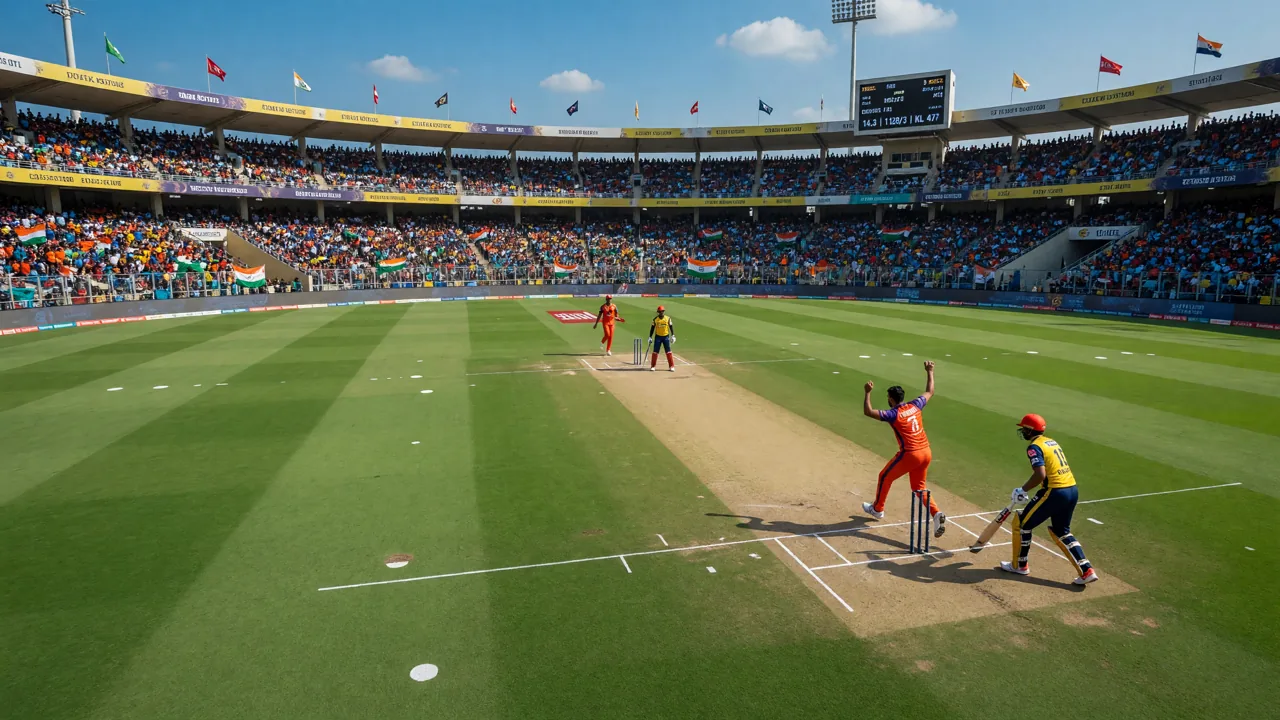
The Indian Premier League has been valued at 20.6 billion dollars in the annual Houlihan Lokey sports-valuation report, a 10.3 per cent year-on-year rise that places the BCCI’s Twenty20 competition second only to the National Football League on a per-match basis in the global sports-brand rankings. Royal Challengers Bengaluru, the back-to-back IPL champion captained by Virat Kohli, were named the league’s most valuable franchise at a brand value of 312 million dollars, with the report published on 30 July and summarised in AFP wire copy carried by Kantipur’s English sports desk.
Two ownership deals dominate the 2026 commercial calendar and anchor the report’s per-franchise numbers. A consortium led by the United States asset manager Blackstone completed a deal worth about 1.8 billion dollars for Royal Challengers Bengaluru — the most expensive franchise transaction in IPL history under the report’s framing. A separate consortium of the Indian steel tycoon Lakshmi N. Mittal and his family, together with the vaccine billionaire Adar Poonawalla, paid 1.65 billion dollars for Rajasthan Royals.
Both transactions close a year in which the BCCI’s flagship competition has moved from a billion-dollar franchise tier (the 2022 Forbes snapshot averaged 1.04 billion dollars per side across the ten teams) to a tier where two franchises alone change hands for 3.45 billion dollars combined. The 20.6 billion dollar league figure is the headline, but the per-match argument is the one that has travelled furthest in editorial coverage: on the metric that matters for commercial comparability — brand value per fixture — only the NFL sits ahead of the IPL in the Houlihan Lokey dataset.
How RCB earned the top brand-value slot
Royal Challengers Bengaluru were named the league’s most valuable franchise at 312 million dollars in brand value. The report attributes the position to three overlapping factors: a back-to-back championship run that closed a drought stretching to the league’s 2008 launch, a captaincy in Virat Kohli whose individual visibility exceeds the franchise average for cricket athletes, and the most engaged social footprint of any IPL side.
RCB’s on-field story is straightforward. The side lost three previous finals in 2009, 2011 and 2016 before breaking through. The 2025 title — a win over Punjab Kings in Ahmedabad — came in the first season under the franchise’s new city name (Royal Challengers Bangalore became Royal Challengers Bengaluru in 2024, reflecting Karnataka’s formal spelling). The 2026 title, in the second season under the renamed franchise, converted the breakthrough into a dynasty case and lifted on-field visibility enough to support a brand-value ceiling above the rest of the league.
For commercial comparability, Houlihan Lokey treats the brand-value figure as distinct from the franchise transaction value. The 1.8 billion dollar Blackstone-led deal is the equity-stake transaction; the 312 million dollar brand figure is the intangible value the report attaches to the franchise name, badge, social reach and competitive history. The two numbers tell different stories but both trend in the same direction: RCB is the league’s commercial centre of gravity in 2026.
The Blackstone-led RCB consortium and the 1.8 billion dollar headline
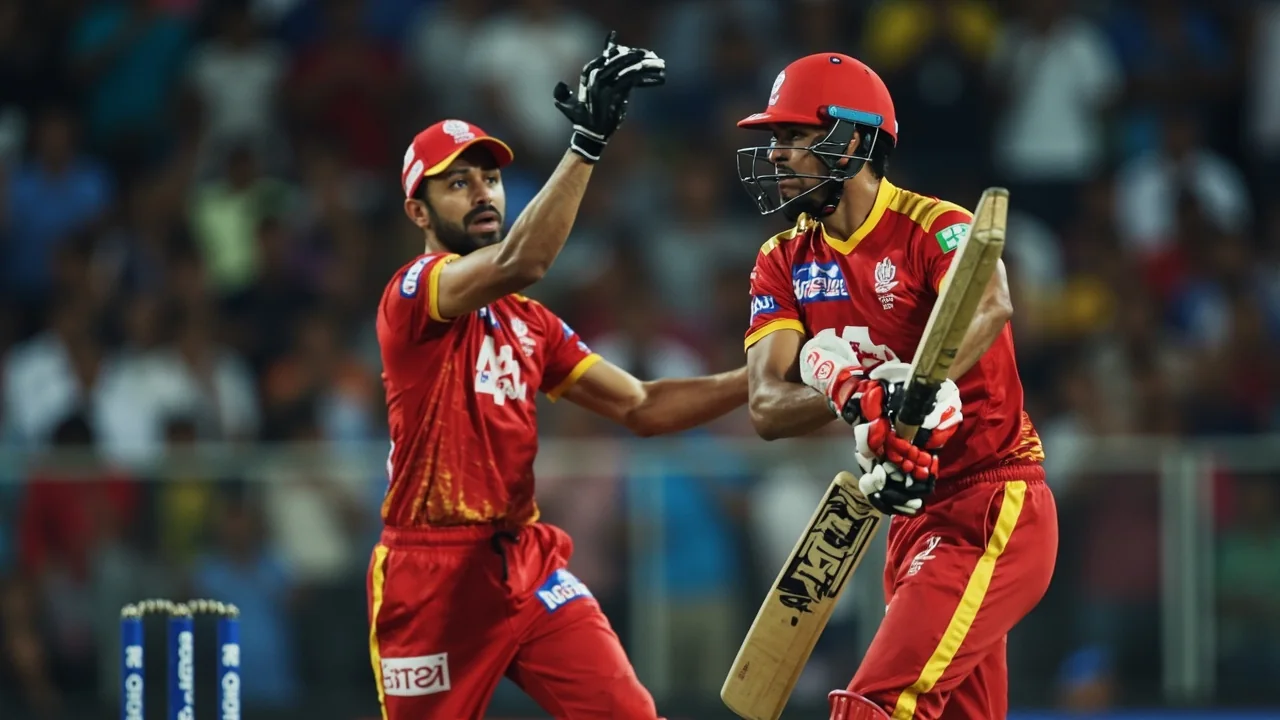
The Royal Challengers Bengaluru deal is the transaction the report leans on to set the per-franchise ceiling. A consortium led by the United States asset manager Blackstone acquired the franchise for approximately 1.8 billion dollars, described in the AFP wire copy as the most expensive franchise transaction in IPL history.
Blackstone’s involvement matters because the firm is the world’s largest alternative asset manager and brings a private-equity scale of capital to a market that has historically been dominated by Indian strategic buyers. The firm’s deal teams have been active across Indian sports for several years, but the RCB acquisition is its highest-profile cricket position. The deal structure — whether Blackstone took a controlling stake outright or built a wider consortium that includes the existing promoter group — was not detailed in the Houlihan Lokey summary.
For the BCCI, the transaction is a signal that the league’s franchise valuations have decoupled from the historical pattern of strategic-buyer-led ownership. The previous decade’s transfer activity was driven by Indian conglomerates with consumer-brand portfolios; the 2026 deals add international private capital at the top of the price range. The shift changes the league’s negotiating position for the next media-rights cycle and for any future central-revenue formula reviews.
For fantasy operators who depend on per-match visibility, the RCB story is also a data point. Two consecutive titles translate directly into season-long viewing and engagement spikes, which feed the captain-pick prediction volume that platforms like Come Sports India track match by match.
Rajasthan Royals, the Mittal-Poonawalla bid and the 1.65 billion dollar close
Rajasthan Royals changed hands in the same window, with a 1.65 billion dollar bid from the Mittal family and the vaccine billionaire Adar Poonawalla. Lakshmi N. Mittal is the chairman of ArcelorMittal and one of the most prominent Indian-origin industrialists globally; Adar Poonawalla is the chief executive of the Serum Institute of India, the world’s largest vaccine manufacturer by doses. The pairing combines industrial capital with biotech-sector visibility — a combination the league has not previously seen on a single franchise deal.
Rajasthan Royals were the 2008 inaugural champion under Shane Warne and have remained a competitive side across most seasons without the same title density as Mumbai Indians or Chennai Super Kings. The franchise has also been one of the more analytically aggressive sides in player trading, a pattern that fits the buyer profile: industrial and biotech capital that wants an asset capable of compounding both competitively and commercially.
The 1.65 billion dollar figure sits below the RCB deal in absolute terms but is unusually high for a franchise without a recent title. The transaction is the clearest evidence in the 2026 cycle that buyers are pricing IPL franchises on a multi-year competitive window rather than on the previous season’s ledger. A side that has reached the playoffs regularly is now worth a billion-dollar-plus premium over the 2022 Forbes average of 1.04 billion dollars per team across the ten franchises.
Per-match value and the NFL comparison
The report’s clearest editorial line is the per-match ranking: on a per-fixture basis, only the National Football League sits ahead of the Indian Premier League in the global sports-brand value dataset. The per-match metric is the cleanest cross-sport comparator because it strips out league size and season length. The NFL plays a 17-game regular season and a small playoff slate; the IPL plays 74 matches a season across ten franchises and 13 venues. On a per-fixture basis, the IPL generates more brand value than any league except the NFL.
Harsh Talikoti, who leads the Houlihan Lokey sports practice quoted in the AFP copy, framed the result in terms of two structural shifts. The first is the broader development of global cricket — the proliferation of franchise T20 leagues in South Africa, the Caribbean, the UAE, the United States and elsewhere has lifted the ceiling on what the IPL’s content is worth to international broadcasters. The second is the further institutionalisation of IPL ownership in 2026, with private capital and family offices taking ownership of franchises rather than the strategic-buyer model that dominated the league’s first 15 years.
The two factors are not independent. International broadcaster demand for IPL inventory has risen because the league’s production quality, on-field standard and star visibility have risen. The institutionalisation of ownership has risen because the league’s revenue base has risen. The report captures the moment at which both curves bend together, and the 10.3 per cent year-on-year figure is the headline number that captures the move.
The Indian economic footprint and the broader franchise effect
The league’s commercial scale does not sit in isolation. A 2020 estimate, cited in the AFP wire copy, put the IPL’s annual contribution to the Indian economy at more than 11 billion dollars. That figure includes direct revenue (media rights, sponsorship, ticketing, licensing), indirect revenue (travel, hospitality, merchandise, in-stadia advertising) and the induced revenue that flows through the broader sports, media and entertainment ecosystem around the league.
Six years on from the 2020 estimate, the league has expanded in two directions that change the economic arithmetic. The Women’s Premier League, launched in March 2023 with five franchises, now runs a parallel calendar with its own auction, salary structure and broadcast deal. The South Asian and overseas T20 franchise market has multiplied — the Big Bash League, the Caribbean Premier League, the SA20, the ILT20, Major League Cricket and the Hundred each operate as either competitors or feeders to the IPL’s player pool. The Houlihan Lokey 20.6 billion dollar figure captures only the IPL itself; the wider ecosystem the league has spawned is a separate, larger story.
The article also notes that the IPL has inspired franchise competitions outside cricket. The Pro Kabaddi League, the Premier Badminton League, the Indian Poker League and a string of boxing promotions have all used city-based franchise ownership as their organising principle, modelling the format on the BCCI’s Twenty20 competition. The pattern is that the IPL’s commercial playbook travels even when the sport itself does not.
A coaching note from the AFP wire: Ryan ten Doeschate returns to KKR
Running alongside the valuation report, the AFP wire also carried a separate cricket-operations item: former India assistant coach Ryan ten Doeschate, the 46-year-old former Netherlands all-rounder, has been reappointed by Kolkata Knight Riders as head of cricket strategy. KKR have won the IPL three times, in 2012, 2014 and 2024, and are co-owned by the actor Shah Rukh Khan as part of the Knight Riders Sports Group. The Group also owns Trinbago Knight Riders in the Caribbean Premier League, Abu Dhabi Knight Riders in the ILT20 and Los Angeles Knight Riders in Major League Cricket.
The Knight Riders Sports Group is the most multi-franchise ownership structure in global T20 cricket, and ten Doeschate’s return to KKR after a stint with India’s senior coaching staff reflects the Group’s preference for coaches with international tactical familiarity. The Knight Riders network — four leagues, four continents, one ownership group — is itself a downstream consequence of the IPL’s commercial playbook, and ten Doeschate’s role sits at the tactical centre of a portfolio that has produced three titles at the parent franchise.
For a reader trying to put the Houlihan Lokey figures in context, the KKR coaching note is the cleanest illustration of how IPL ownership now operates. The same group that bid on player auctions in Abu Dhabi, Trinidad, Dubai and Los Angeles now staffs a single head-of-cricket-strategy role across the portfolio. The valuation report captures the financial shape; the coaching announcement captures the operational shape. The two belong together in any honest reading of where the IPL sits in 2026.
Three signals to watch across the rest of the 2026 commercial calendar
The valuation report is a snapshot, not a terminal figure. Three signals over the rest of the 2026 commercial calendar will tell readers whether the 10.3 per cent year-on-year move is the start of a new curve or a single-year spike.
First, the next media-rights cycle. The BCCI’s central media-rights deal is the largest single revenue source for every IPL franchise, and the next negotiation will set the per-match ceiling for the next five years. A higher per-match figure would lift the league value further; a flat or declining figure would test whether the Houlihan Lokey 20.6 billion dollar reading is the floor or the ceiling.
Second, the next round of franchise transactions. Two transfers have set the 2026 reference points. If a third franchise changes hands at a similar or higher multiple, the per-franchise ceiling will move higher again. If no further transactions occur before the next media-rights cycle, the existing deals stand as the league’s reference points for another year.
Third, the Women’s Premier League’s next broadcast and title-sponsorship cycle. The WPL has grown faster than the senior league did at the same stage, and the next commercial cycle will tell readers whether the women’s competition is on a parallel valuation curve or whether it sits at a different point on the same one.
- 30 July 2026 — Houlihan Lokey publishes its annual sports valuation report with the IPL at 20.6 billion dollars, RCB at 312 million dollars brand value.
- 2025 season — Royal Challengers Bengaluru win the IPL title in Ahmedabad, the franchise’s first championship in 18 seasons.
- 2026 season — RCB win a second straight title, lifting per-match visibility enough to anchor a top-of-league brand-value reading.
- Blackstone-led RCB deal — approximately 1.8 billion dollars, the most expensive IPL franchise transaction in the league’s history per the Houlihan Lokey framing.
- Mittal-Poonawalla RR deal — 1.65 billion dollars for Rajasthan Royals, pairing industrial capital with biotech-sector visibility.
- KKR coaching note — Ryan ten Doeschate reappointed as head of cricket strategy, with the Knight Riders Sports Group portfolio covering the IPL, CPL, ILT20 and MLC.
What the league number actually tells you
The 20.6 billion dollar league figure is a brand-value aggregate, not a transaction price. It is built from the sum of the ten franchises’ brand-value readings plus a league-level central-rights adjustment. The figure does not include the equity value of the franchises — which would sit higher, given the 1.8 billion dollar RCB deal and the 1.65 billion dollar RR deal as reference points.
The two most-cited numbers from the report — the 20.6 billion dollar league figure and the NFL-on-per-match comparison — answer different questions. The league figure answers “how big is the IPL?” The per-match figure answers “how valuable is each fixture the league produces?” The two figures belong together in any reader’s mental model of the report.
For a fantasy operator, the practical read-through is straightforward. Per-match value is the variable that drives broadcast inventory, which drives fixture-level visibility, which drives the captain-pick and prediction volume that platforms track match by match. A league whose per-match value sits second only to the NFL is a league where every fixture carries weight — and where the marginal captain-pick decision in a low-visibility match is worth more, in expectation, than it would be in a lower-per-match-value league. The Houlihan Lokey report is, in that sense, a quantitative confirmation of what fantasy players have been pricing in for several seasons.
Sources and attribution
- Houlihan Lokey annual sports valuation report, 2026 edition (figures cited via AFP wire copy).
- AFP wire copy carried by Kantipur, English sports desk, published 30 July 2026 (URL:
ekantipur.com/sports/2026/07/30/ipl-is-worth-206-billion-25-47.html). - Quoted attribution: Harsh Talikoti, Houlihan Lokey sports practice.
- Editorial structure and historical context: IPL 2026 coverage on Come Sports India.
Frequently asked questions
How much is the IPL worth in 2026?
Which IPL franchise is the most valuable?
Who bought Royal Challengers Bengaluru?
Who bought Rajasthan Royals?
Why does the per-match figure matter?
Track every IPL 2026 fixture on Come Sports India
Captain picks, predictions and Rs 1 entries for all 74 matches.