West Indies and Pakistan Name Probable Elevens for the Second Test at Queen's Park Oval
West Indies carry a 1-0 lead into the second Test at Queen’s Park Oval after Justin Greaves’ seven-wicket haul in Trinidad, with both dressing rooms circulating probable elevens and Pakistan missing Shan Masood.
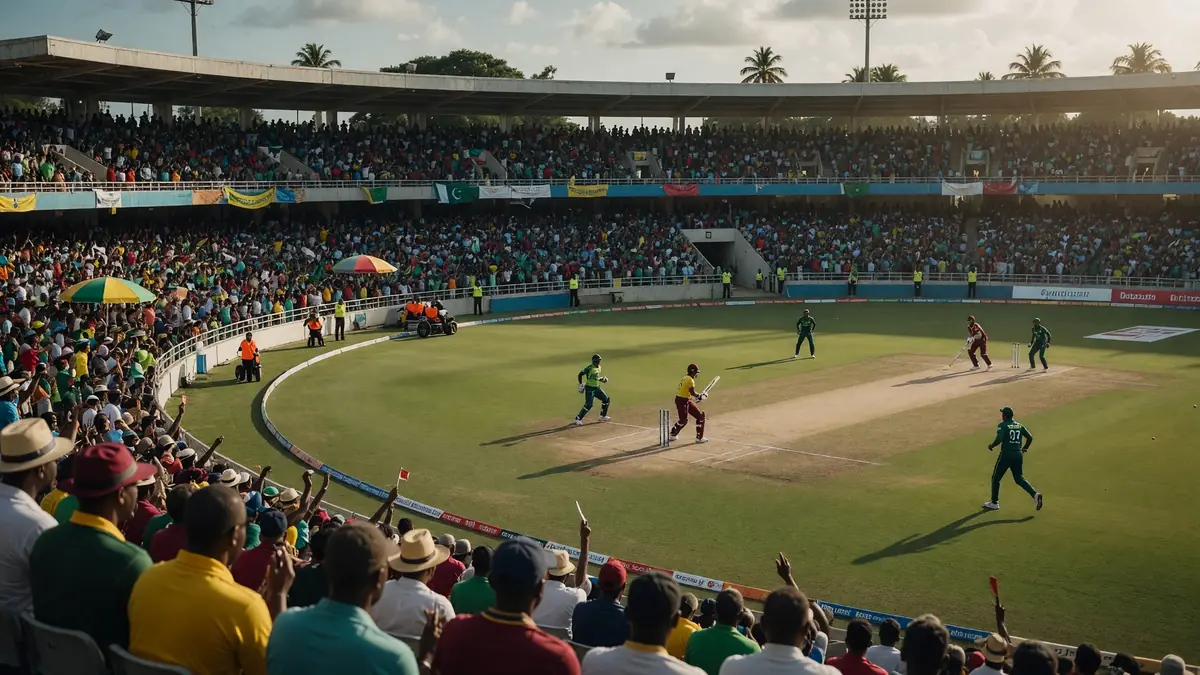
West Indies beat Pakistan by 90 runs in the first Test in Trinidad and now lead the two-match series 1-0. The second Test is scheduled for 2–6 August 2026 at Queen’s Park Oval in Port of Spain, with the first ball listed for 7:30 p.m. IST. Both camps have circulated probable elevens, Roston Chase is named as West Indies captain, Babar Azam is listed as Pakistan captain, and Shan Masood has been ruled out for the visitors.
For Indian readers who follow international squad sheets as closely as franchise auctions, the story sits in the selection detail. Justin Greaves took seven wickets in the opener and was named Man of the Match. Mohammad Abbas and Jayden Seales each claimed five-wicket hauls in the same match. Those bowling returns, more than any slogan about momentum, explain why the second Test is being framed around seam depth, top-order repair work and whether Pakistan can stabilise without Masood.
West Indies are also chasing a first bilateral series win over Pakistan in 23 years. That historical line does not invent a result for Port of Spain; it simply explains why a 1-0 home lead carries extra weight before the sides reconvene at Queen’s Park Oval.
How the series arrived at 1-0
The first Test gave West Indies a clear lead and left Pakistan sorting through batting collapses that undid stronger passages of play. Greaves’ seven-wicket match haul made him the standout performer and Man of the Match. Abbas and Seales, with five wickets apiece, underlined that the surface rewarded disciplined seam rather than patient accumulation alone.
A two-match series leaves almost no recovery margin. Pakistan cannot split the rubber later in the tour; they must win in Port of Spain or leave the Caribbean empty-handed. West Indies, by contrast, need only avoid defeat to close out a bilateral series result they have not managed against Pakistan for more than two decades. That asymmetry shapes selection risk: the hosts can protect a working combination, while the visitors are under pressure to adjust.
Head-to-head numbers still favour Pakistan across the longer arc. In 57 Tests between the sides, Pakistan hold 22 wins to West Indies’ 19, with 15 matches producing no result. Those career figures do not erase a live 1-0 deficit, but they explain why Babar’s side will treat Queen’s Park Oval as a salvage mission rather than a dead rubber.
Fixture, timing and how Indian viewers can follow
The second Test runs across five scheduled days from Sunday 2 August through Thursday 6 August 2026. The published start time for Indian audiences is 7:30 p.m. IST, which places the bulk of each session in prime evening and late-night windows at home. The venue is Queen’s Park Oval in Port of Spain, Trinidad — a short hop from the first-Test site in Trinidad, but a fresh surface and a different crowd dynamic.
Indian fans are directed to the FanCode mobile app or website for live coverage of the second Test. That single-stream path matters for viewers who usually hop between linear sports channels on bigger bilateral tours. Confirming login status before the toss avoids the familiar scramble when the first over starts after dinner in India.
Because the series is already live, team news will move quickly through the final training sessions. Probable elevens listed below should be read as directional sheets, not locked team cards. Captains still adjust for fitness, pitch look and balance between a third seamer and an extra batter.
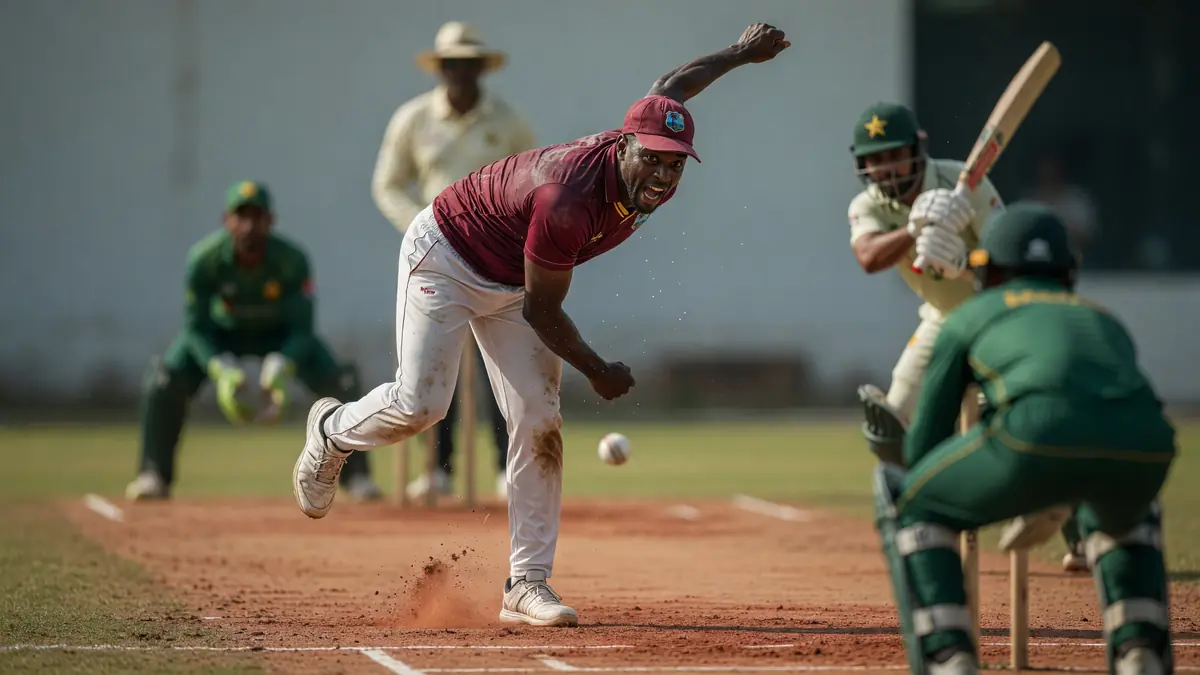
Seam rewards defined the first Test, where Greaves, Abbas and Seales all produced match-shaping spells.
West Indies probable XI and what it signals
The West Indies probable eleven circulating ahead of the second Test is: Brandon King, Tagenarine Chanderpaul, Kavem Hodge, Shai Hope (wicketkeeper), Amir Jangoo, Justin Greaves, Roston Chase (captain), Kemar Roach, Jomel Warrican, Shamar Joseph and Jayden Seales.
West Indies (probable)
Brandon King, Tagenarine Chanderpaul, Kavem Hodge, Shai Hope (wk), Amir Jangoo, Justin Greaves, Roston Chase (c), Kemar Roach, Jomel Warrican, Shamar Joseph, Jayden Seales.
Chase’s captaincy sits at the centre of the sheet. Pairing his off-spin and lower-middle batting with Greaves’ all-round overs gives West Indies two flexible bowling options if the ball stops swinging. Hope keeps wicket and anchors the middle, a dual role that becomes heavier if the top three fail to blunt the new ball.
The pace cluster is the clearest takeaway from the first Test. Roach supplies experience with the new ball, Joseph adds raw pace, and Seales arrives with a five-wicket haul already banked in the series. Keeping that trio together, rather than rotating for rotation’s sake, is the conservative call for a side protecting a lead. Warrican remains the specialist spin option if Queen’s Park Oval offers grip later in the match.
At the top, King and Chanderpaul are listed to open, with Hodge at three. That order will be watched closely by anyone tracking Caribbean batting depth beyond white-ball cycles. Jangoo’s inclusion lengthens the batting before Greaves and Chase, which is a logical response when Pakistan’s seamers — Abbas in particular — have already shown they can string long, accurate spells.
Readers who map international squads for contest planning can cross-check these roles against the broader cricket teams and squads desk notes, where franchise and national combination patterns are tracked side by side.
Pakistan probable XI and the Masood gap
Pakistan’s probable eleven is listed as: Azan Awais, Imam-ul-Haq, Abdullah Shafique, Babar Azam (captain), Mohammad Rizwan (wicketkeeper), Salman Agha, Aamer Jamal, Ali Usman, Khurram Shahzad, Mohammad Ali and Mohammad Abbas.
Pakistan (probable)
Azan Awais, Imam-ul-Haq, Abdullah Shafique, Babar Azam (c), Mohammad Rizwan (wk), Salman Agha, Aamer Jamal, Ali Usman, Khurram Shahzad, Mohammad Ali, Mohammad Abbas.
Shan Masood’s absence is the single largest confirmed change on the visitor side. Removing a senior batter forces Pakistan to rebalance the top order around Awais, Imam and Shafique before Babar arrives at four. That is a heavier load on young and returning combinations in overseas conditions where the ball has already talked.
Babar’s captaincy return in the Test format places leadership and middle-order responsibility on the same player. Rizwan’s gloves and batting remain the stabiliser behind him. Salman Agha supplies another middle-order option and a part-time bowling outlet, while Aamer Jamal offers seam-bowling all-round overs if the attack needs a fifth option without surrendering batting depth entirely.
The specialist bowling group leans hard on reverse and accuracy. Abbas arrives with a five-wicket haul from the first Test. Khurram Shahzad and Mohammad Ali complete a seam-heavy look, with Ali Usman providing spin variety. If Queen’s Park Oval plays anything like the first Trinidad surface — assisting the bowling side and making the fourth innings especially awkward — Pakistan’s path back into the series still runs through early wickets rather than a single batting masterclass.
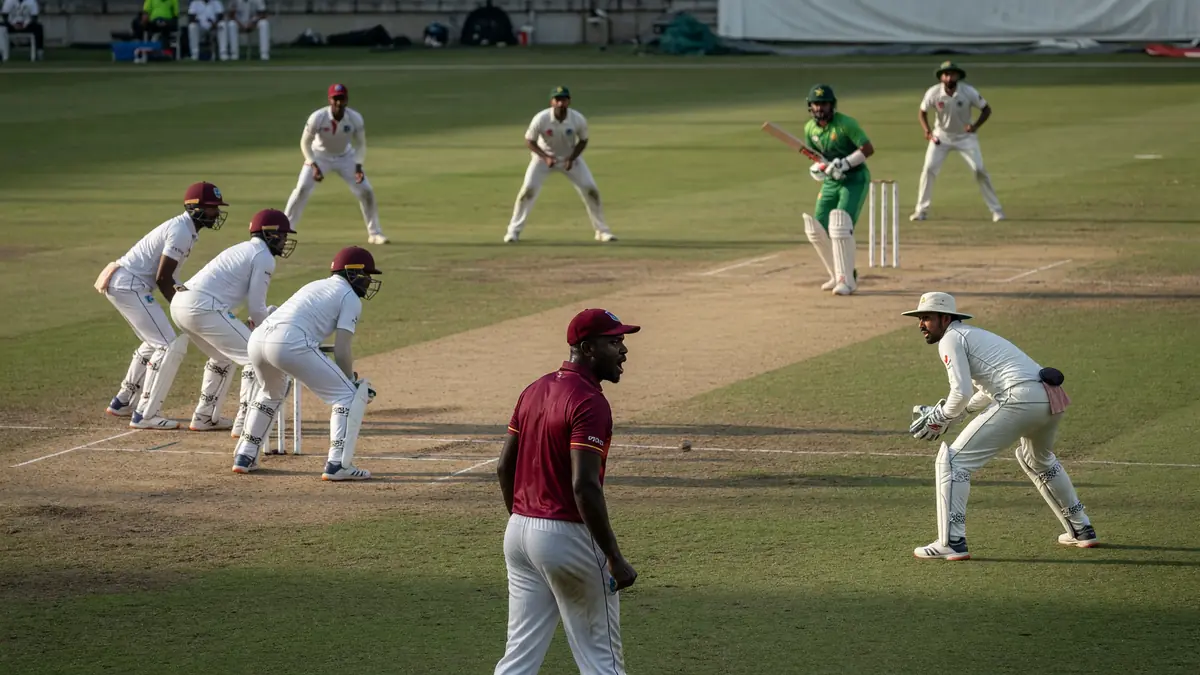
Both camps are refining field plans and bowling changes after a seam-dominated first Test in Trinidad.
What the ground report suggests without overclaiming
Preview notes around Port of Spain describe a surface expected to assist the bowling side, with another pacer-dominant pitch possible after the first Test. That reading favours sides willing to bowl tight lengths and batters prepared to leave well early. Batting first is framed as the safer strategic preference because the fourth innings can become harder as the match ages — a familiar Caribbean Test pattern when the ball scuffs and the bounce loses reliability.
None of that replaces the toss. Captains will still walk the square on the morning of the match, check grass cover and decide whether an extra seamer outweighs a sixth batter. The verified facts stop at the scheduled venue, the series state and the probable combinations; pitch behaviour on day one remains a live variable.
West Indies’ pace resources look better matched to that forecast than a spin-first plan. Pakistan’s reply depends on whether Abbas can again find a full length that forces edges, and whether the reshuffled top order can blunt the new ball long enough for Babar and Rizwan to settle.
Players carrying the heaviest workload into Port of Spain
Shai Hope was the standout West Indies batter in the first Test according to the match preview that listed the probable sheets. Babar was the principal run-scorer of note for Pakistan in the same report. Those two names sit at the centre of any second-Test batting conversation, not because other players are irrelevant, but because the first match already identified them as the most reliable counters to the seam threat.
With the ball, Abbas and Seales are the clearest carry-over threats after their five-wicket hauls. Greaves remains the X-factor because his seven-wicket match haul came with all-round overs that let Chase manage workloads. If Greaves again contributes with bat and ball, West Indies can protect Roach and Joseph across a five-day stretch while still attacking both edges of the Pakistan order.
For Pakistan, Masood’s unavailability raises the value of Imam and Shafique’s judgement outside off stump. A pair of starts from the top three would change the texture of the contest even if West Indies still hold the series lead. Without those starts, Babar is forced to rebuild too often against a fresh ball and an attacking field.
Reading the squad sheets without inventing a result
Probable elevens are planning documents. They tell you who is fit enough to be named, which balance each coach prefers on paper, and where the pressure points sit after the first result. They do not lock the toss, the first hour or the weather across five Caribbean days.
What is locked today is simpler. West Indies lead 1-0 after a 90-run win. Greaves was Man of the Match with seven wickets. The second Test is at Queen’s Park Oval from 2–6 August 2026, starting 7:30 p.m. IST for Indian audiences on FanCode. Chase and Babar are the listed captains. Masood is out. Abbas and Seales already have five-fors in the series. The all-time Test ledger between the sides sits at 57 matches, Pakistan 22, West Indies 19, no-result 15.
Hold those facts steady and the second Test becomes easier to follow: a home side protecting a rare series chance against Pakistan, and a visiting side that must rewrite its top order while still leaning on the seamers who kept it competitive in patches of the opener.
Editorial note. Probable elevens and match context are drawn from the Cricketnmore preview published 2 August 2026. Final XIs can still change at the toss.
Next checkpoint: toss and confirmed elevens at Queen’s Park Oval
The series moves to Port of Spain with West Indies one win from a first bilateral series victory over Pakistan in 23 years. The next hard data points are the toss and the confirmed elevens before the 7:30 p.m. IST start on 2 August, followed by whether Pakistan’s reshuffled top order can blunt the new ball without Shan Masood.
Frequently asked
When does the West Indies vs Pakistan second Test start for Indian viewers? The match is scheduled for 2–6 August 2026, with a listed start time of 7:30 p.m. IST.
Where is the second Test being played? Queen’s Park Oval, Port of Spain, Trinidad.
What is the series scoreline? West Indies lead 1-0 after beating Pakistan by 90 runs in the first Test in Trinidad.
Who captains the two sides in the listed elevens? Roston Chase is listed as West Indies captain. Babar Azam is listed as Pakistan captain.
Who won Man of the Match in the first Test? Justin Greaves, after taking seven wickets in the match.
Is Shan Masood available? No. He has been ruled out of the second Test.
How can fans in India watch? Live coverage is listed on the FanCode mobile app and website.